
Falls Are the Leading Cause of Death in Construction
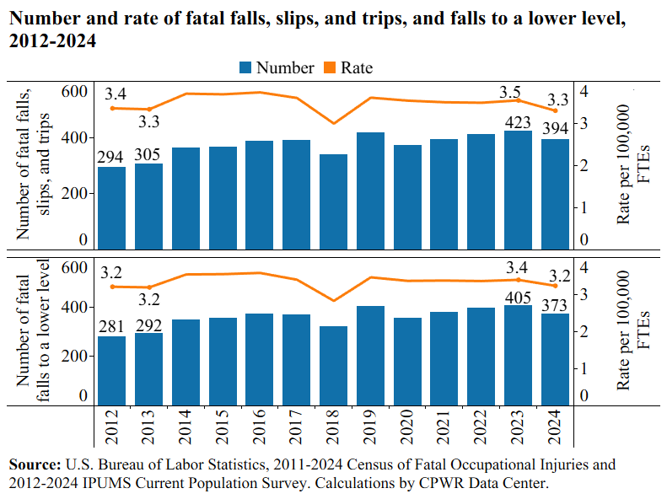
Construction is a hazardous industry, and falls are the most likely cause of workplace death for construction workers. In 2024, on average at least one worker died per day from a fatal fall to a lower level (373 workers). In the same year, fall protection in construction remained the most frequently cited standard by OSHA for the eleventh consecutive fiscal year.
Concerningly, construction workers are just as likely to die from a fall to a lower level today as they were in 2012. From 2012 to 2024, the the number of fatal falls to a lower level increased but the rate remained the same. The total number of fatalities increased by 32.7% . The rate – a measure that compares the number of fatalities with the number of hours worked in the sector annually – stayed stable. You can learn more about trends in on the Falls Campaign’s Injury and Incident Data webpage.
To raise public awareness of construction hazards and the need for improved safety in the industry, CPWR has maintained a Fatality Map since 2011. This map provides detailed geographic information and other circumstances about fatal injuries in the US construction industry. Filter by injury type on the map’s data dashboard to learn more about fall fatalities.
Prioritizing Falls Saves Lives
Although falls are the leading cause of death in construction, every fall is preventable. Taking steps to prioritize falls can save lives.
Planning is an essential step in preventing falls. In CPWR’s 2021 Fall Experience Survey, insufficient or ineffective planning was the most selected primary cause for falls, and lack of planning was associated with a lower likelihood of using fall protection. The odds of using fall protection were 71% lower for individuals whose employer or competent person did not do any planning compared to those whose employer or competent person did do planning or they were not sure.
In the same survey, nearly half (48.8%) of respondents said that no fall protection was being used at the time of the fall. However, employers can make a difference: employee beliefs about their company’s fall protection policy were strongly associated with the use of fall protection. Respondents who believed fall protection was required by their employer were eight times more likely to use fall protection compared to those who did not believe fall protection was required.
In addition, rescue training may help reduce fall-related deaths. In the same survey, the odds of a fall being fatal were 76% lower for those who had self-rescue training compared to those who did not have this training.
Use Resources to Prevent Falls
Tools and resources are available that can help you to prevent falls. Use the following resources from the National Campaign to Prevent Falls in Construction to improve safety on your jobsite:
- Training resources such as safety meeting guides (toolbox talks), infographics and tipsheets, worker handouts, videos and webinars, podcasts, and mobile apps.
- Planning resources such as information on rules and regulations for employers, written fall prevention plans, and year-round fall prevention.
- Research resources such as Fatality Assessment and Control Evaluation (FACE) reports, injury and incident data, research findings and reports, and CPWR’s Fatality Map.
- Stand-Down participation resources such as information on how to plan and promote your Stand-Down, how to order hardhat stickers and other resources, success stories from previous years’ events, and evaluation of the event.
- Resources in languages other than English are shared throughout all of the above links, and are compiled in Spanish here and in languages other than Spanish here.
We also want to hear from you – what resources would help you to prevent falls most effectively? Contact us at falls@cpwr.com to provide input.